Infrared Roof Moisture Survey in Newport News, VA
Map suspected moisture under commercial roofing in Newport News with infrared imaging and confirmatory core cuts before setting repair quantities.
Home / Commercial Roofing Services / Infrared Roof Moisture Survey
Infrared Roof Moisture Survey
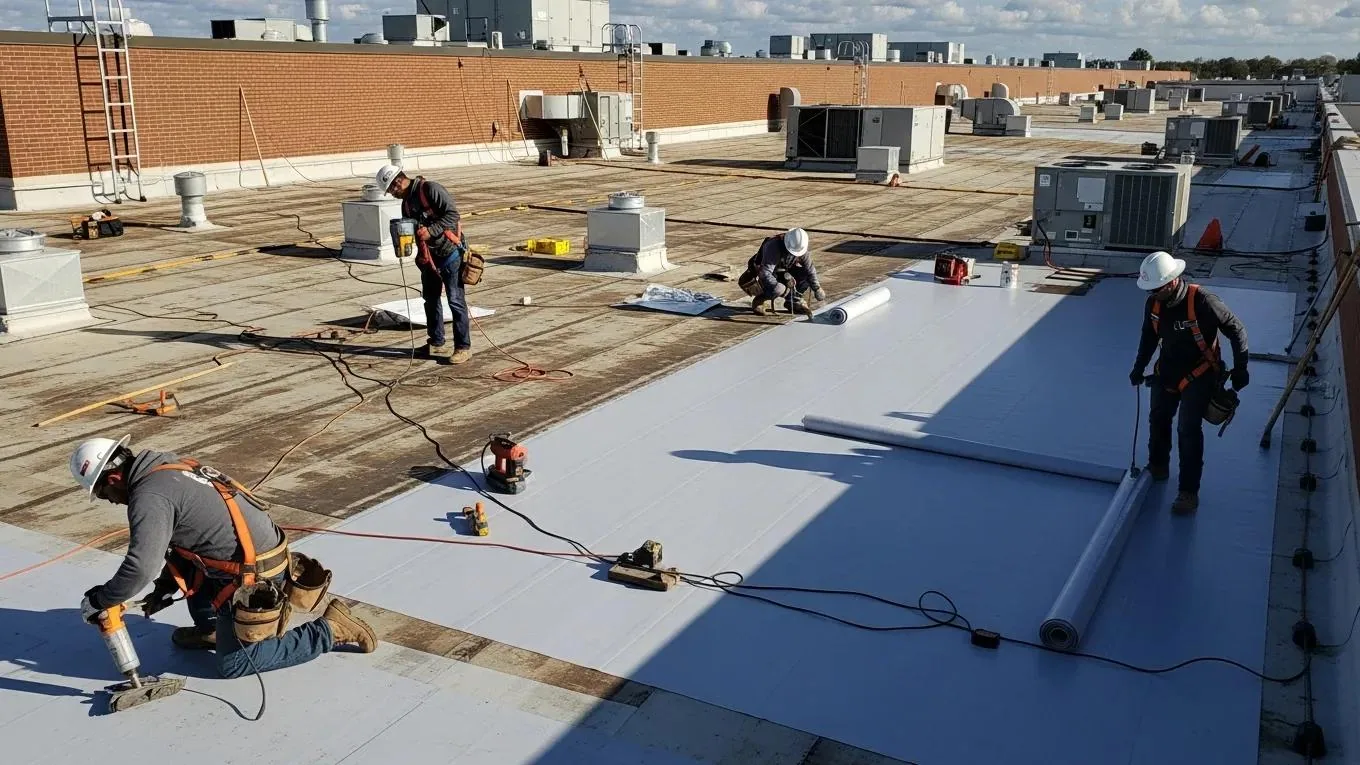
Thermal patterns on a roof are evidence to sort, not a moisture map by themselves. An infrared moisture survey in Newport News, VA can help locate areas that may hold water beneath a membrane, especially when a large roof gives the maintenance team more ground to cover than it can inspect visually in one pass. We review the roof history, weather conditions, system type and scan timing, then compare thermal observations with surface conditions and selected core cuts. The owner receives marked locations, photographs and a clear account of what was confirmed and what remains uncertain. Around Greater Oyster Point and City Center, an office or research facility may use the results to prioritize a repair phase. At the Oakland Industrial Park or a shipyard support building, mapping can help plan access and reduce unnecessary roof openings.
How Thermal Imaging Helps
Infrared equipment detects temperature differences at the roof surface. Under suitable conditions, wet materials can retain heat differently from dry materials after the sun has warmed the roof and temperatures begin to fall. The pattern can help narrow where to inspect, but it is affected by insulation type, membrane color, clouds, wind, recent rain, interior conditions and rooftop equipment. A shaded section may read differently from an exposed one. We schedule the survey for conditions that can produce useful contrast and record factors that may affect interpretation.
Before scanning, we review roof plans if available and identify known leaks, repair areas, drains, equipment, wall transitions and changes in roof assembly. Newport News records humid summer design conditions, intense rainfall and recurring freeze-thaw cycles, all of which can affect roof condition and survey timing. We also ask about recent rain because water at the surface can distort a reading. On a roof near Newport News Shipbuilding or the James River waterfront, wind exposure and secure access may shape the survey window. The site contact helps us plan around the actual building and operations.
Confirm Before Setting a Quantity
A thermal image alone cannot confirm the depth, type or extent of moisture. A warm or cool area may come from insulation, deck construction, air leakage, repairs, shadows or rooftop equipment. We mark anomalies for follow-up and use core cuts or other accepted confirmation methods where the owner authorizes access. A core sample lets the team see the layers directly, identify wet insulation and check the deck at a selected point. Samples should be located to test the pattern, not scattered without a reason.
We explain the survey limits and label which areas are thermally unusual, which were confirmed by a core and which remain unverified. If the roof has several systems or additions, each assembly may need separate interpretation. A drone image survey can help map surface layout and access, but it does not confirm hidden moisture. A hands-on roof inspection checks visible seams, flashing, edges and drains alongside the thermal work.
Map Suspected Roof Moisture
Send the Newport News property address, roof concern, leak history and operating window. We will review survey conditions, explain core-cut needs and provide a documented moisture boundary.

From Scan to Repair Boundary
After confirmation, we outline the measured area to remove, dry or replace and note the adjacent sections that remain sound based on available evidence. If wet insulation extends beyond the first sample, we can take additional cuts where authorized and revise the boundary. The repair scope should show material layers, approximate quantities, deck condition and temporary protection needs. That helps the facility manager avoid pricing the entire roof from one anomaly or treating a small sample as proof that a broad area is dry.
At a commercial property with offices, research space or manufacturing nearby, repair staging and tenant operations can affect where samples and removal occur. We coordinate roof openings with the facility contact and close each sample location securely. When the assembly is substantially wet or the deck needs broader work, the owner can compare localized repair with recover or replacement. A condition report with thermal images and core results keeps those decisions tied to mapped locations and test evidence.
Survey Scope and Project Cost
Survey cost depends on roof area and complexity, number of separate buildings, access, weather window, equipment, scan timing, number of confirmatory cores and the report detail required. A roof plan or prior inspection can make the survey more efficient, but we still verify site conditions. The proposal states whether core cuts are included, how many are planned and how additional samples will be approved. It also identifies patching or repair needed to close each sample location.
If the survey is part of a purchase, capital plan or insurance review, tell us what decision the report must support. We can organize findings by roof section, priority and recommended next action without overstating what imagery proves. On a property within the Patrick Henry Corridor, a large roof footprint may make mapped test locations useful for sequencing. A smaller office near Tech Center may need a focused investigation around one recurring leak. The test plan should fit the question rather than produce an arbitrary number of readings.
The Right Conditions and Access
Infrared surveys usually need a period of solar warming followed by cooling, with clear enough weather and manageable wind. Recent rain, cloud cover or strong gusts can reduce useful contrast or make roof access unsafe. We confirm conditions before the visit and may move the scan if the surface or forecast will not support meaningful interpretation. The building team should share roof access procedures, security rules, areas that must remain clear and any interior conditions that could influence readings.
Newport News includes the Port of Virginia, Newport News Marine Terminal, shipbuilding and research campuses, so access can depend on the individual property's operating rules. We coordinate with the responsible contact and keep the sampling plan clear of active equipment and traffic lanes. If a roof cannot be accessed safely during the available window, we explain whether another date or a different inspection method can answer the question. Sampling also requires approval for penetrations and a plan to restore each opening.
A Useful Record for Repair
The final deliverable should show thermal images, the roof-area map, test locations, core findings, limitations and the repair boundary that the evidence supports. We label anomalies separately from confirmed wet areas and note the conditions during scanning. The owner can use that record to request repair pricing, plan a phased project or monitor a dry section. If conditions change after the survey, new water entry or roof work can change the evidence and require another review.
Share the property address, roof system if known, leak history and the decision you are trying to make. We will confirm whether infrared imaging is appropriate, identify any needed core cuts and outline access and restoration. For active interior water, start with leak tracing and immediate protection; a moisture survey can follow when the roof and weather allow reliable readings. To request the survey, use the project contact form and include the facility schedule. The report should leave the property team with a measured next step, not just a set of colored images.
Questions About Infrared Roof Moisture Survey
Does infrared testing prove an area is wet?
No. It identifies temperature patterns that may indicate a difference beneath the surface. We compare readings with roof conditions and use core cuts or another confirmation method before assigning a wet-insulation quantity.
What weather is needed for an infrared roof survey?
The roof generally needs useful solar warming followed by cooling, with manageable wind and no conditions that compromise access or interpretation. Recent rain and cloud cover can change the readings, so timing is confirmed for the site.
How many core cuts will you take?
The number follows the roof layout, scan pattern and decision being made. We identify planned sample points and obtain authorization before opening the roof; added samples are discussed if initial results leave the boundary uncertain.
Will you close each test opening?
Yes. The scope identifies how sample locations will be patched or restored after testing. We document the location and repair so the facility team can track the survey and any later roof work.
Can the survey identify the exact repair cost?
It can improve quantity estimates by mapping confirmed wet areas, but final cost also depends on removal depth, deck condition, access, material and detail work. We price those elements after defining the confirmed repair boundary.