Commercial Roof Leak Repair in Newport News, VA
Trace active commercial roof leaks in Newport News, protect interior operations and repair the roof entry point with a documented scope.
Home / Commercial Roofing Services / Commercial Roof Leak Repair
Commercial Roof Leak Repair
A wet ceiling tile at a Newport News, VA facility gives the team a place to start, not the location of the roof opening. Water can move along a deck, insulation, conduit or framing before it shows inside. We inspect above the affected area and trace the path across seams, curbs, wall transitions and drains. The first objective is to limit interior exposure; the next is to find and repair the entry point rather than seal only the visible stain. At a research building near Tech Center, that may mean protecting equipment and coordinating access through occupied space. At a waterfront warehouse near the Seafood Industrial Park, it may mean keeping product, machinery and dock operations dry. We record what was wet, what was tested and which roof detail failed, so the repair scope follows the actual water path.
Limit Interior Exposure
When water is active, the facility contact should identify the rooms, electrical equipment, inventory and production areas at risk. We can place temporary protection where access and conditions permit, then mark the affected ceiling or wall areas for monitoring. If water is near electrical systems, staff should follow the building's safety procedures and keep people clear. Interior containment reduces damage while the roof inspection proceeds, but it does not replace a dry-in or permanent repair.
We ask about the time the leak began, recent rain or wind, equipment use and any earlier repairs. Photos and a simple room plan help connect the interior report to the roof above. Newport News has recorded significant wind and intense rainfall in local engineering data, so we check edge metal, membrane attachment, drainage and wall flashing after severe weather. Those citywide conditions do not identify damage at an individual property. The inspection must confirm the roof condition directly. For a leak that needs immediate temporary control outside regular business hours, our around-the-clock emergency response can address initial protection and dry-in.
Trace the Water Path
Starting at the interior mark, we inspect the corresponding roof area and expand outward along likely travel paths. We check membrane seams, patches, penetrations, HVAC curbs, skylights, drains, scuppers, parapets and transitions to higher walls. Ponding water, debris, staining or a previous coating can affect what the surface shows. A leak may track several feet from a defect, and a second opening may contribute to the same interior spot. We photograph suspect details and distinguish observations from confirmed entry points.
When visual inspection does not isolate the cause, controlled testing can help. We may use moisture readings, infrared imaging or a core cut where the roof assembly and access allow. Each method has limits, so we explain what was tested and what remains uncertain. If repeated water entry has spread into insulation, an infrared and core-cut moisture survey can map the affected area before repair quantities are set. A photo condition report gives the owner a record of the test locations and findings.
Get a Leak Traced in Newport News
Provide the property address, affected room and access hours. We will coordinate roof and interior access, limit exposure where possible, and document the repair boundary.
Close the Confirmed Opening
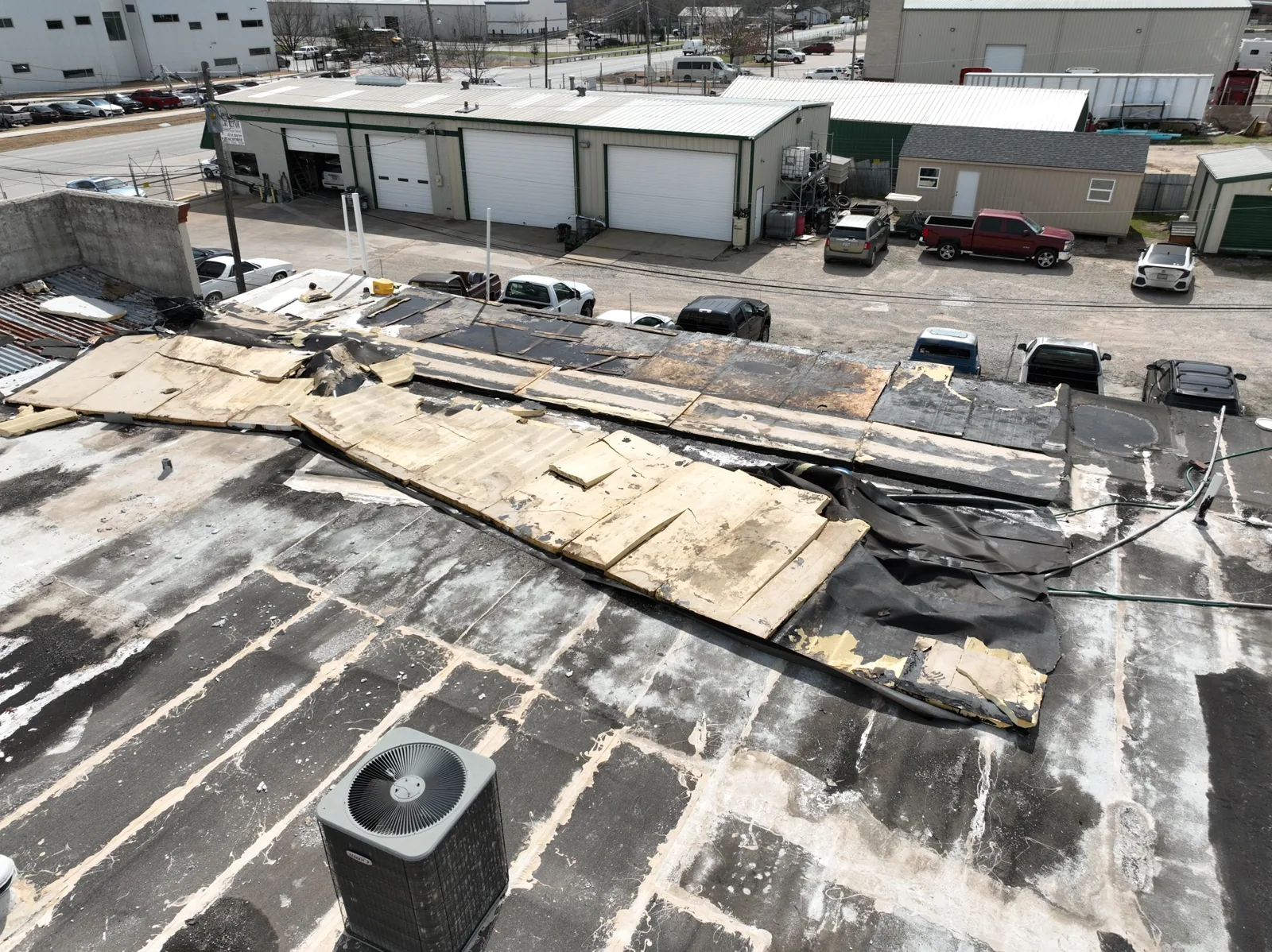
The repair follows the material and detail that failed. A membrane split may need compatible reinforcement; a loose lap needs cleaning and a seam repair; a curb or wall leak may require rebuilt flashing. At a drain, we clear the outlet, inspect the connection and repair the surrounding membrane. For metal roofs, fasteners, panel seams and transitions require a method suited to the system. We define the repair area, prepare the surface and verify that the new material ties into sound, compatible roofing.
If insulation is wet or the deck is compromised, a surface patch alone leaves the underlying condition in place. We document the measured extent and explain whether selective removal or broader work is needed. At some buildings, repair can be completed in one visit; other assemblies need a test opening, material cure time or a weather window. We state those dependencies before the facility team schedules the work. If the leak reflects a wider maintenance problem, planned roof repair can cover other confirmed defects in a separate, prioritized scope.
Access, Weather and Operations
Leak tracing often moves between a roof, ceiling space and active rooms. We coordinate access, escorts, lift or ladder placement, tenant notifications and any equipment shutdown before the visit. In the Yard District, a shipyard or port operation may have controlled entry and delivery windows. Near City Center, occupied offices, medical uses and research facilities can require quiet work and protection for interior equipment. The site contact can help us reach the affected rooms and identify areas that cannot be interrupted.
Weather determines whether a permanent repair can be made that day. Damp surfaces, cold conditions or wind can keep a repair material from bonding or make roof access unsafe. We can install temporary protection when appropriate, then return when the surface and forecast allow a lasting repair. Newport News summer design conditions include heat and humidity, while local weather data also records recurring freeze-thaw cycles. We account for those conditions in surface preparation and the repair plan, without treating them as proof of the specific leak cause.
Confirm the Repair
After the repair, we document the location and detail addressed, provide photographs and note any nearby condition that remains under observation. If a controlled water test is appropriate, we describe the test area and result. The facility contact should know what to monitor inside and when to call if moisture returns. A return leak can signal a missed secondary opening, movement at a transition or moisture that traveled from a different section. The repair record helps the next inspection start with evidence instead of repeating the same search.
Send the property address, the room or equipment affected, when the leak appeared and the access hours. We will inspect the roof above, trace likely water paths and separate temporary protection from permanent repair. Where a larger roof decision is needed, an inspection with documented findings can identify whether repair remains practical. You can also share any recent interior photos and prior repair notes through the project contact form. We will confirm the visit plan with the facility contact and state what we need to reach the roof and affected space.
Questions About Commercial Roof Leak Repair
Why does the ceiling stain appear away from the roof leak?
Water can travel along insulation, a deck, framing or conduit before reaching the interior finish. We start at the reported area and inspect surrounding roof details to trace that path back to a likely entry point.
Can you stop water before permanent repair is possible?
Temporary dry-in or interior protection can reduce exposure when the roof and weather allow safe work. We explain what the temporary measure covers and schedule permanent repair after surfaces and conditions support it.
What should the facility team send before the visit?
The property address, affected room, time the leak began, recent weather, roof access instructions and any earlier repair record help us prepare. Interior photographs can also show the area that needs protection first.
Will one repair stop leaks across the building?
A repair closes the confirmed defect. If inspection finds separate openings or wet insulation beyond it, we document those findings and present additional work as a distinct scope.
How do you verify that the source was found?
We document the roof detail, test findings where used and the completed repair. When conditions allow, a controlled test or follow-up observation can check the repaired area, while the facility team monitors the original interior location.