Commercial Roof Capital Planning in Newport News, VA
Plan commercial roof repair and replacement budgets in Newport News, VA using measured condition, access windows, system needs and clear priorities.
Home / Roofing Capabilities / Commercial Roof Capital Planning
Commercial Roof Capital Planning
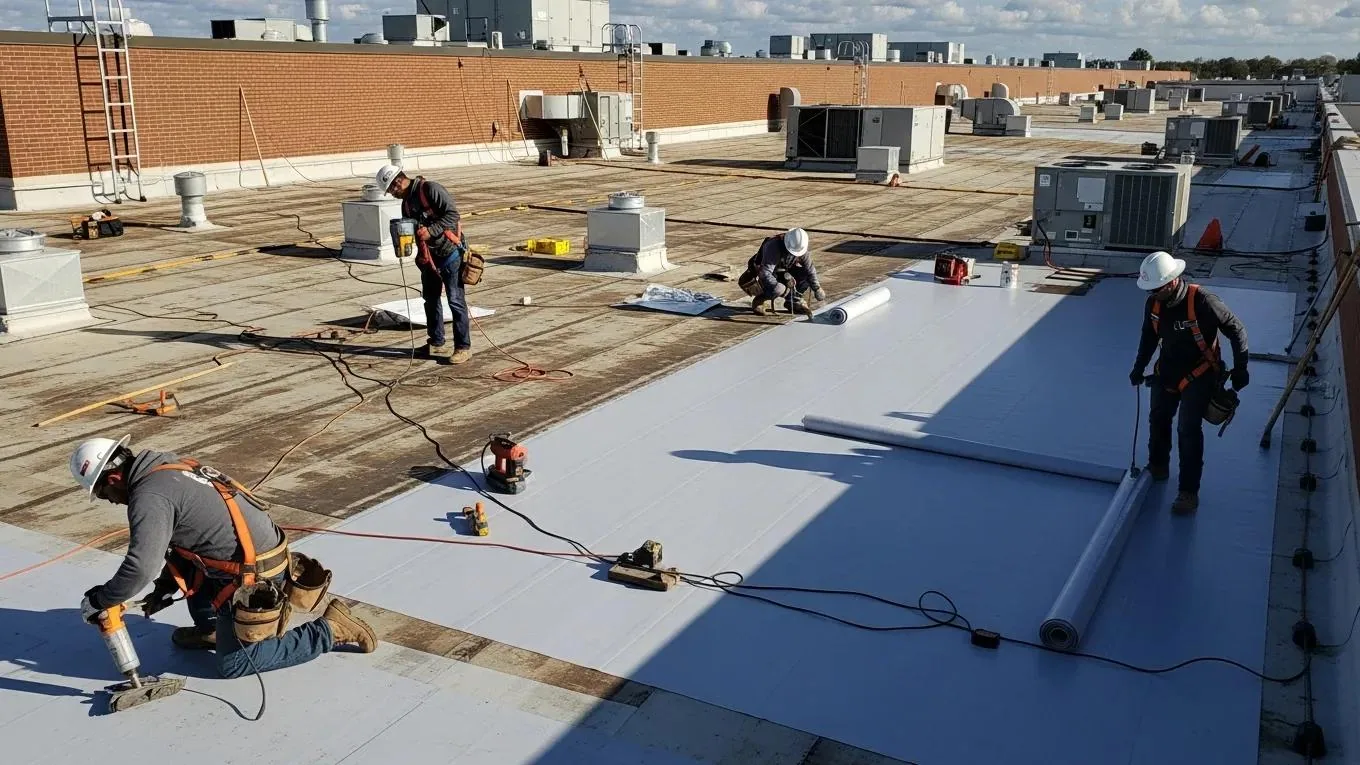
A replacement budget is more useful when it follows the roof condition instead of an assumed age. In Newport News, VA, we inspect each building, record active leaks and measured repair areas, and identify what remains uncertain before laying out near-term and future work. That gives ownership a capital sequence tied to the roof itself, with access, system and operating constraints attached to each phase.
City Center offices and retail spaces have different operating windows from industrial facilities around Oakland Industrial Park. A portfolio may include both, so replacement timing should account for each site's access and use rather than apply one calendar to every roof.
Start with Current Conditions
We review seams, flashing, drains, edges, penetrations and prior repairs, then photograph and map relevant findings. When moisture may extend below the surface, testing or a controlled opening can establish whether insulation is affected. The report marks confirmed repair quantities separately from suspected areas. That matters because a capital plan built from unverified quantities can misstate both project size and timing.
A commercial roof inspection can gather the observations for planning, while condition reports preserve the photos and repair boundaries. If a property file includes an earlier report, we can compare it with current inspection findings without treating a past observation as present roof condition.
Newport News engineering-weather records show intense design rainfall, high basic wind and recurring freeze-thaw cycles. These conditions inform inspection priorities for drainage, seams and attachment. We set replacement timing from system condition, inspection findings and the owner’s planning horizon.
Separate the Current Repair from the Future Project
A capital plan can distinguish an active leak, a repair that protects the existing system, a maintenance item and a broader renewal. We state why each task sits in its phase and which condition could make it more urgent. A localized flashing repair should not be buried in a future replacement allowance when it needs prompt attention; a roof with no active leak should not be called an emergency without evidence.
System, wet insulation, substrate, flashing, edge detail, tear-off, disposal and staging affect cost. Work near occupied or production areas may also require a particular shutdown window. We list measured areas and assumptions, then flag access or testing questions that can change the estimate. Those are the factors ownership needs to compare similar scopes across a portfolio. We can show whether a figure assumes a full tear-off, recover or local repair, and whether it includes insulation replacement or flashing renewal. If testing is pending, we label the area and explain whether it could change the project size. That lets a reviewer distinguish a firm scope from a planning allowance.
For Newport News nonresidential buildings, the city points designers to Chapter 16 of Virginia Construction Code. A planned replacement may involve different review than a local repair. We describe the proposed assembly and scope so project staff can determine permit and design steps before setting a construction date.
Set a Roof Budget from Measured Conditions
Share the Newport News property addresses, current concerns and budget horizon. We will inspect the selected roofs and identify immediate repairs and planned capital phases.

Set Timing Around Property Operations
A project may need advance tenant notice, equipment coordination, material staging and a period when roof access is clear. We ask for the operating hours and shutdown windows before estimating a phase. If the work is large, phased reroofing can divide it into sections and identify when each portion of the building is affected.
At Greater Oyster Point, the district combines office, research, healthcare and retail activity. Patrick Henry Corridor and AirCommerce Park sit near the airport and commercial destinations. These district details can shape logistics questions, but the individual property's contact confirms roof access, delivery routes and work hours.
A capital schedule can reflect weather and mobilization constraints as well as budget. Newport News design data includes high wind and intense rainfall; a phase should account for protection if the roof is opened and installation conditions for the selected system. We identify what must be ready before the project proceeds. A replacement may also need coordination with equipment servicing, tenant notices and delivery access. Those dependencies can be listed beside the roof phase, so moving one date does not hide the reason for the change.
Compare Renewal Options on the Same Basis
Repair, coating, recover and replacement serve different roof conditions. A coating requires a suitable surface and substrate. A recover depends on existing layers, attachment and code requirements. Full replacement may be warranted when deterioration is broad, insulation is affected or the assembly cannot support another layer. We state the findings that support each option so the owner can compare both cost and remaining open questions.
For multiple properties, roof asset management can keep inspection date, system, condition and completed work with each building. A multi-site program can coordinate inspections and phases while retaining each property’s measured scope.
Commercial property near City Center may be occupied during the work, while manufacturing locations may need a production window. The plan can show which phase serves each property and why. That gives finance and facilities teams a basis to sequence capital without losing the operational facts behind the recommendation.
Carry the Decision into the Next Budget
Each phase should identify the work, measured area, access assumption, timing dependency and next decision. After repairs or replacement, we can update the record with photos and completed sections. If testing remains open, it stays visible as a planning dependency rather than appearing as a confirmed quantity.
Send the Newport News addresses, available roof records, leak history and budget horizon. We will inspect the selected buildings, document conditions and organize work into immediate, planned and longer-range scopes your team can review. Each item can include an owner decision, inspection need or timing dependency, giving facilities and finance staff a specific question to resolve before funds are assigned. We can update the sequence as completed work changes the remaining roof priorities and access plans. The sequence can be reviewed again after each phase. at review.
A capital plan should show the condition basis, planning horizon, scope assumptions and dependencies behind each proposed project. Keep a current repair separate from a future replacement allowance, and note where testing or design is needed before funds can be committed. Owners can compare options on a consistent basis when roof area, removal layers, insulation, access and phasing are visible. Revisit priorities after repair work because new evidence may change the timing of renewal.
Record the basis date for each estimate and revisit it when scope, access or material assumptions change. Planning figures should not be mistaken for an approved bid.
Questions About Commercial Roof Capital Planning
How do you estimate when a roof should be replaced?
We document current condition, active leaks, wet insulation and repair history, then describe options supported by inspection. A date alone does not establish remaining roof life.
Can a capital plan include both repairs and replacement?
Yes. We can separate active repairs, maintenance and broader renewal, with a reason and access dependency for each phase.
What can make a roof budget change after inspection?
Opening the assembly, finding wet insulation, confirming substrate condition or changing access assumptions can affect quantity and timing. We identify those open items before authorization.
How should multiple buildings be prioritized?
Compare active water entry, verified deterioration, measured work and available access windows by address. The record shows why each project is urgent or belongs in a planned phase.
Can work be scheduled around a tenant or production calendar?
We can outline phases around stated access and shutdown windows. Material delivery, weather, roof layout and installation requirements also affect the feasible sequence.
Related Roofing Work