Commercial Roofing for Public Agencies in Newport News, VA
Roof inspection, repair and capital planning for Newport News public buildings, with clear scopes, access coordination and documented work phases.
Home / Industries We Serve / Public Agencies

Public Agencies
A public building roof project needs a scope that can be reviewed, scheduled and tied to a specific facility condition. For Newport News, VA agencies, we inspect the reported area, trace the likely water path and document the repair boundary before recommending a larger program. The record can show photographs, measured locations, access assumptions and issues that still need testing. That gives facilities staff a basis for planning work across active public services.
Government offices and service sites do not share one operating schedule. Greater Oyster Point includes corporate, research, healthcare and retail uses, while public facilities may be spread across different districts, including the Patrick Henry Corridor. We confirm each address, the building contact and any public access hours before deciding how a roof visit should proceed.
Document the Condition and Its Limits
We check the membrane or metal surface, seams, flashing, drains, roof edges and equipment penetrations around the reported issue. A ceiling stain can sit away from the roof opening, and moisture may move beneath the surface. If an area cannot be measured without further testing or opening the assembly, the report states that limit. It should distinguish a confirmed repair from a suspected condition that still needs investigation.
Our commercial roof inspection can provide photos, marked locations and recommendations that facilities staff can retain with the building file. Drone imagery may help establish a broad layout, and infrared survey work can identify areas for closer testing when conditions allow. An active leak can receive emergency response around the clock, including weekends and holidays, with site access coordinated through the agency contact.
For work at a public-facing facility, we identify entrances, service routes and areas that the agency wants kept open. If equipment must be shut down or a public counter has limited hours, those constraints belong in the schedule. We describe the roof work and access plan; the agency sets its building and public safety controls.
Coordinate Scope with Current Requirements
Public roof scopes should be checked against the city’s nonresidential criteria in Chapter 16 of the Virginia Construction Code and the agency’s approved project documents. Virginia’s 2021 Uniform Statewide Building Code and 2021 Virginia Construction Code took effect on January 18, 2024. The applicable permit and design requirements depend on the work and building, so we identify the roof scope and coordinate code questions with the agency’s project process rather than treating a repair description as an approval.
That matters when a project changes attachment, insulation, assembly layers or structural conditions. A like-for-like repair and a full replacement can trigger different review needs. The proposal states the work being priced and assumptions that affect removal, recover or replacement. Agency staff can route the documents through the applicable review and procurement steps before construction begins.
Roof access, staging and site controls can also affect the schedule. Near the Patrick Henry Corridor, traffic and airport activity may shape deliveries at some addresses; Fort Eustis Boulevard connects I-64 with the active Army installation. Those corridor facts help frame logistics questions, while the project contact confirms the actual access route and site requirements.
Document the Public Building Roof Scope
Share the Newport News facility address, reported condition and access requirements. We will inspect the relevant area and return a documented scope for your review process.
Separate Immediate Repairs from Planned Renewal
A failed flashing detail or limited seam opening may be repaired locally. Broad wet insulation, recurring leaks or deterioration across multiple transitions can point toward wider work. We explain the observed boundary and what additional testing could change it. This makes the near-term action visible without turning a single water report into a blanket replacement recommendation.
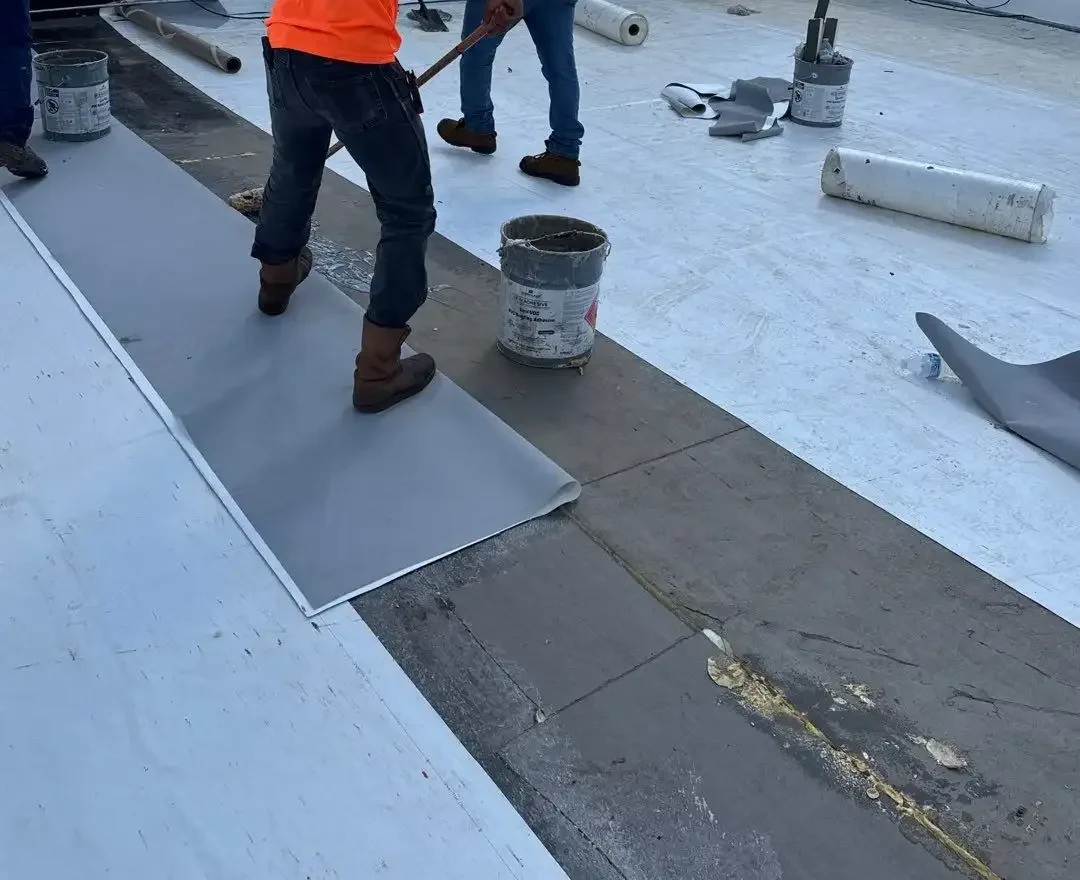
Coating, recover and replacement depend on the existing system and substrate. A coating needs a suitable surface; a recover must fit the assembly and applicable requirements; replacement may be needed where deterioration is extensive or the layers cannot support another system. We can show the alternatives and list the findings or testing that separate them.
For a building that remains open, phased reroofing can identify sections, access restrictions and public-facing work periods. The plan notes staging and material routes for staff to review. If the roof assembly reveals a new condition after opening, we document it and seek scope review before proceeding beyond authorization.
Build a File that Supports the Request
Cost depends on the measured area, roof type, insulation condition, flashing, edge work, curb details, tear-off, disposal, access and any limits on working hours. We separate confirmed quantities from assumptions. If a public procurement form calls for line items, the scope can identify the repair task and related access or testing needs so staff can compare proposals on the same basis.
Newport News engineering-weather data reports intense rainfall, high basic wind and recurring freeze-thaw cycles. Those conditions make drainage, edge attachment and seam condition useful inspection points, but they do not prove a defect at a city building. We base the repair recommendation on the site evidence and document what was accessible.
Capital planning can place emergency repairs, near-term maintenance and replacement work in separate phases. The report can show condition, timing and access dependencies by building. This gives budget reviewers a reason for priority and a defined next action instead of an undifferentiated roof allowance.
Preserve the Work History
Closeout can record the repaired area, photographs, material installed and adjacent conditions excluded from the authorized work. A building supervisor can use that record to evaluate a later report or plan a maintenance visit. We note any follow-up inspection or testing still needed so an open issue does not get lost in the project file.
Agencies coordinating multiple facilities can use multi-site roof records to compare condition and action while keeping each address distinct. School and training properties have different calendars from office sites; our school district roofing work accounts for those operating windows. The same practice applies across public facilities: tie the schedule to the building and the evidence found there. Property managers use comparable records when coordinating multiple addresses.
An agency file should separate the inspection record, procurement assumptions and final acceptance documents. Identify who can approve roof access, change an occupied-space schedule and authorize concealed-condition work. If public access must remain open, document the route and daily protection plan before the bid is finalized. At closeout, provide the measured work area, accepted changes and remaining maintenance recommendations in a format that future staff can retrieve without relying on a contractor's informal notes.
Questions About Public Agencies
Can your roof scope support a public procurement review?
We can state the measured work, included details, access assumptions and open questions in a written proposal. Agency procurement and approval requirements remain with the agency's process.
What code applies to a public building roof project?
Newport News points nonresidential design criteria to Chapter 16 of the Virginia Construction Code. The exact review requirements depend on the work, so project staff should route the defined scope through the applicable city process.
Can a public facility remain open during roof work?
A project may be divided into phases, with entrances, staging and work areas identified for staff review. The feasible sequence depends on the building, access rules and operating hours.
How do you prioritize several agency buildings?
We document each address separately, then compare active leaks, measured repairs, broader deterioration and access needs. The record shows why a property needs immediate action or can enter a planned phase.
What should we provide to request an inspection?
Send the building address, roof concern, facilities contact, public hours and any site access rules. Existing plans or prior work records can help, but we confirm present roof conditions during the visit.
Related Roofing Work