Commercial Roofing for Insurance and Restoration Projects in Newport News, VA
Commercial roof inspections, emergency repairs and photo documentation for insurance and restoration projects in Newport News, VA.
Home / Industries We Serve / Insurance Restoration
Insurance Restoration
A claim file needs a roof condition that can be located, photographed and described without stretching what the inspection proves. For restoration teams and adjusters in Newport News, VA, we document the affected assembly, visible damage and repair boundary, then list areas that require further testing. That record supports a clear roofing scope while keeping observed conditions separate from cause, coverage or settlement decisions.
Hurricane Isabel brought damaging wind and surge to the lower Peninsula, and local engineering data records significant wind and rainfall design conditions. We document the current roof condition and use event records only when the property evidence supports that comparison. At the property, we inspect what is present and document how the roof condition relates to the reported loss. The Greater Oyster Point district and the Newport News Seafood Industrial Park are local settings, not substitutes for site evidence.
Record What the Roof Shows
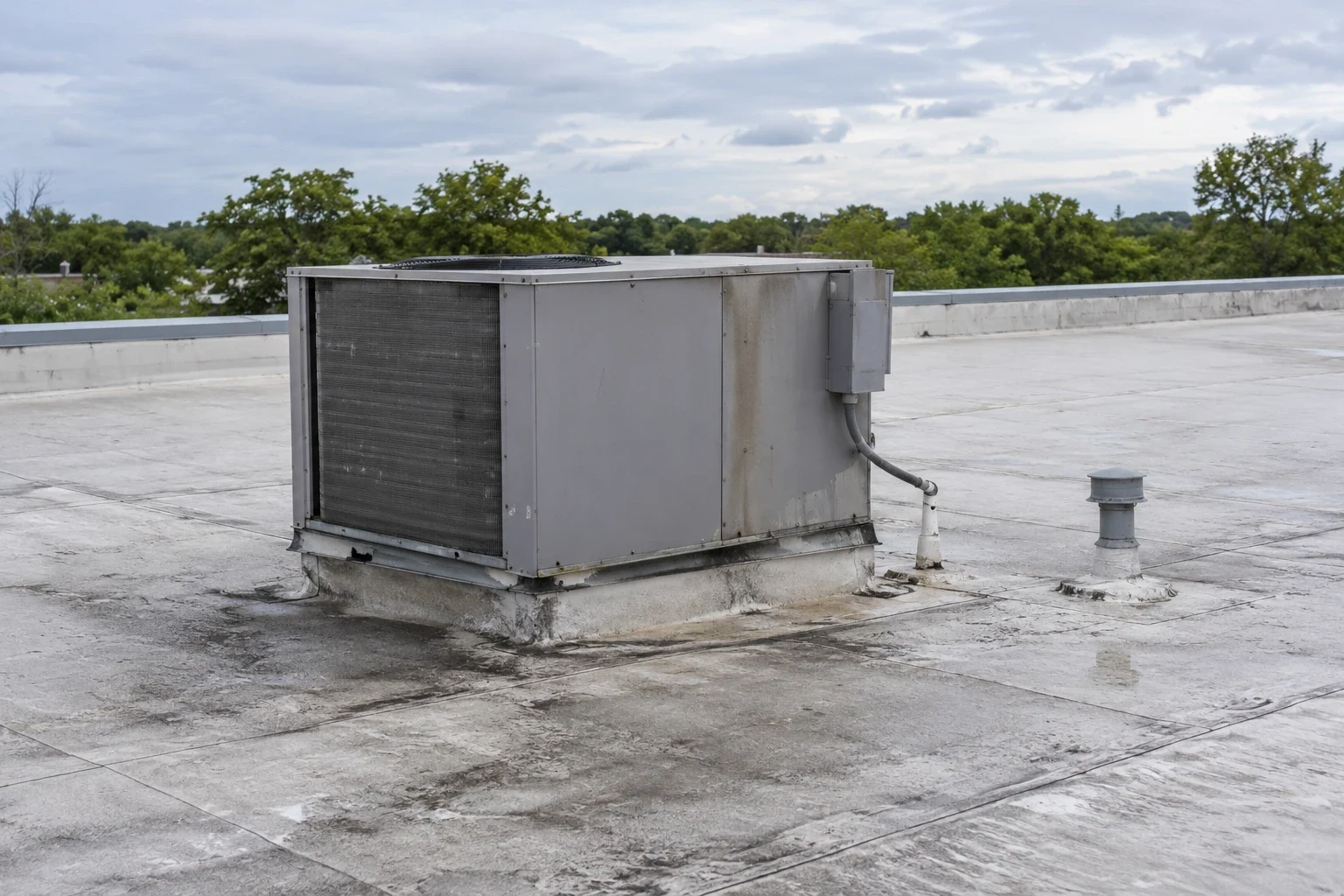
We inspect the membrane or metal surface, seams, flashings, penetrations, drains and edge details around the reported area. Photographs can show a puncture, displaced material, failed transition or other visible condition, with a marked plan to locate it. If water has traveled beneath the surface or moisture is suspected in insulation, we identify where testing or opening the assembly would be needed to confirm extent.
Our storm damage roof repair work begins with the roof condition and any immediate water control needed. An inspection report can include the date, accessible areas, observations, photos and recommended action. Emergency response is available at all hours, including weekends and holidays, when an active leak needs attention before a full scope is ready.
For claim documentation, the repair boundary matters. A small membrane opening may not represent all affected material, while a nearby stain may not establish that the entire roof is damaged. We note what is directly observed, what is related by the building contact and what remains unresolved. That gives the restoration team a basis for additional investigation if the first inspection cannot confirm the full assembly condition.
Stabilize the Roof and Preserve the Evidence
When water is entering, emergency stabilization can limit further exposure while the permanent repair is defined. We document the temporary action, the area it covers and any condition that still needs evaluation. If a repair can be completed safely during the first visit, we identify the work performed and retain photos of the affected detail.
A lasting repair should address the failure path, including connected flashing, seams, drains or edge transitions that could admit water again. If the roof has broad deterioration or wet insulation beyond the immediate opening, a limited patch may not resolve the full condition. We explain the repair boundary and any testing needed before estimating wider replacement work.
After the initial response, a commercial roof inspection can document the wider system and record other visible conditions. If the property is occupied, phased repair or reroofing may help coordinate the work zone, access and temporary protection with the site contact. The scope remains specific to what is found at the building.
Document the Newport News Roof Condition
Share the property address, reported loss date, interior location and access contact. We will inspect the roof and prepare a record that separates observed conditions from open questions.
Separate Repair from Full Restoration
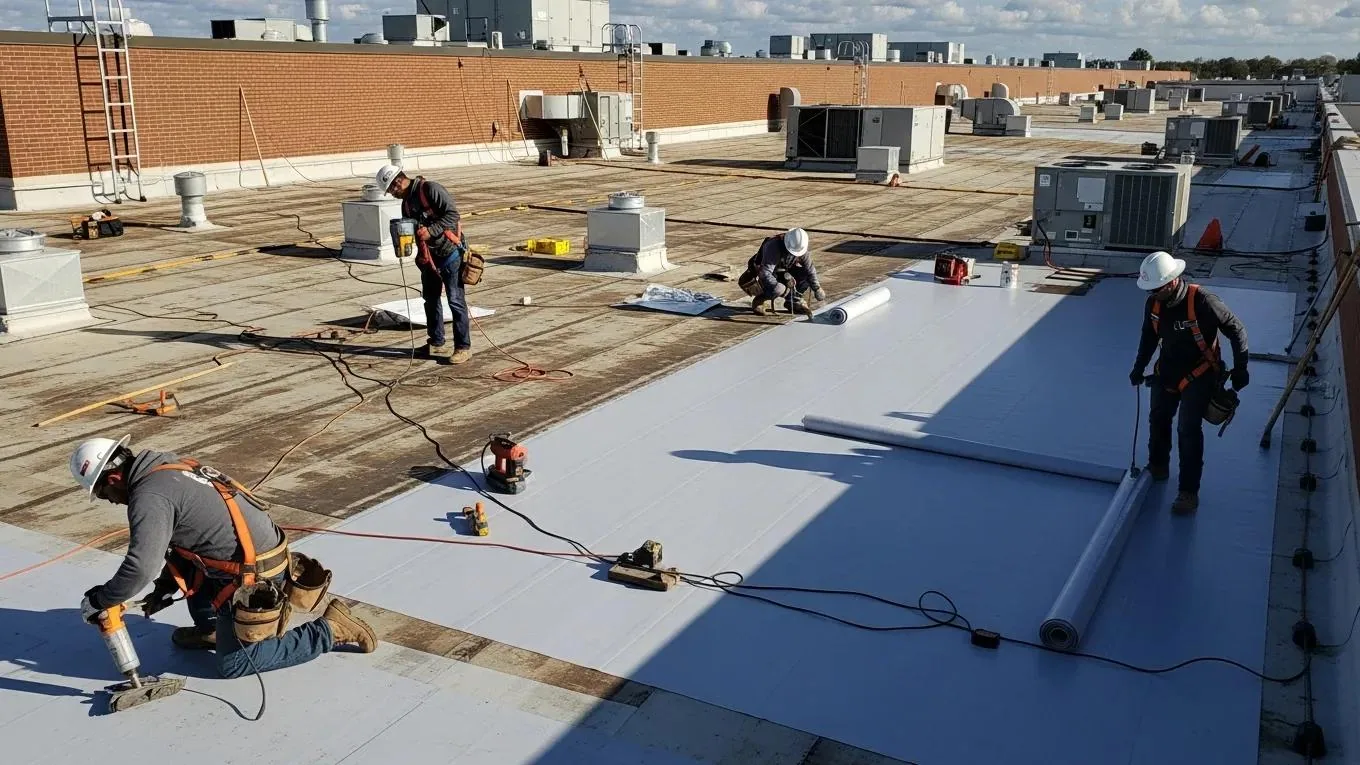
Repair, coating, recover and replacement depend on the existing assembly and confirmed condition. A coating needs a suitable substrate; recover work depends on the roof layers and attachment; replacement may be indicated by broad deterioration or an assembly that cannot support another system. We describe the option supported by the inspection and identify assumptions about moisture, substrate and access.
When an insurance file and a restoration proposal are being assembled, it helps to keep measured repair quantities separate from a broader upgrade or maintenance scope. We can show which details address the reported condition and which items are additional work for owner consideration. The roofing proposal describes construction tasks; coverage decisions belong to the relevant insurer and policy process.
Weather records for Newport News show a 50-year basic wind speed of 100 mph and a 100-year rainfall rate of 3.4 inches per hour in the local engineering dataset. We assess attachment and drainage separately from storm causation, which the inspection report ties only to supporting property evidence. Our findings are based on the roof, the reported timing and the conditions visible during the visit.

Keep the File and Field in Step
Restoration schedules often require coordination among the property contact, mitigation team and roofing crew. We confirm where water was reported, what temporary work has been done and which area needs inspection. Then we identify roof access, staging and any tenant or operating limits. A shared location reference helps the field work match the photographs and estimate.
Newport News Shipbuilding, the James River waterfront and the Seafood Industrial Park are part of a maritime economy where active operations and delivery paths can matter. A commercial building near Greater Oyster Point may have a different access pattern, with offices, retail, research and healthcare in the surrounding district. We confirm the site's actual staging and access rules rather than infer them from the location.
For a commercial property manager coordinating several buildings, portfolio records can keep each incident, inspection and repair status tied to its address. A general contractor managing repair and tenant improvements may also need the roof scope aligned with other trades. We document the roofing work separately so responsibilities remain clear.
Make the Repair Record Useful After the Claim
Closeout can list the completed roof detail, photographs, materials and any open follow-up item. If a second area remains outside the authorization or needs a moisture test, the record identifies it without suggesting it was repaired. That distinction helps the owner, restoration team and future maintenance provider understand what changed.
Send the Newport News property address, event or leak date if known, reported interior location, temporary mitigation and access contact. We can inspect the roof, document visible conditions and prepare a repair scope. For active leaks, emergency response is available around the clock, including holidays.
Keep the first-response record factual: date observed, weather reported by the insured, interior location, roof zone inspected, photographs, temporary measures and any area that could not be accessed. Avoid attributing cause until the assembly and surrounding details have been examined. If the carrier or owner requests a repair estimate, identify the measured scope and exclusions separately from claim decisions. This preserves a useful field record without presenting a coverage conclusion as a roofing finding.
Questions About Insurance Restoration
Can your report determine whether a storm caused the roof damage?
Our field report records visible roof conditions and information reported by the building contact. Cause may require additional evidence and belongs to the claim review; our roofing record does not decide coverage.
What does an emergency roofing visit document?
The emergency visit can record the affected area, visible roof details, temporary stabilization and items that need follow-up inspection. The report distinguishes completed work from conditions still being evaluated.
Can you document roof findings with the claim team at the property?
At the property, we can coordinate an inspection with the contact and other project participants. The visit focuses on roof access, observed conditions and the repair scope each party needs to review.
How do you avoid overstating the repair area?
We mark the measured boundary and describe where water or visible damage suggests further investigation. Areas that have not been confirmed remain separate from the authorized repair quantity.
Can the roof be repaired while mitigation is underway?
Once mitigation is underway, we can coordinate safe roof access with that team. The permanent repair sequence depends on the assembly, remaining moisture, staging and site operations.